Geology

Exploring the Foundations of Our Planet

A Comprehensive Overview of Earth Sciences

The Science of Earth

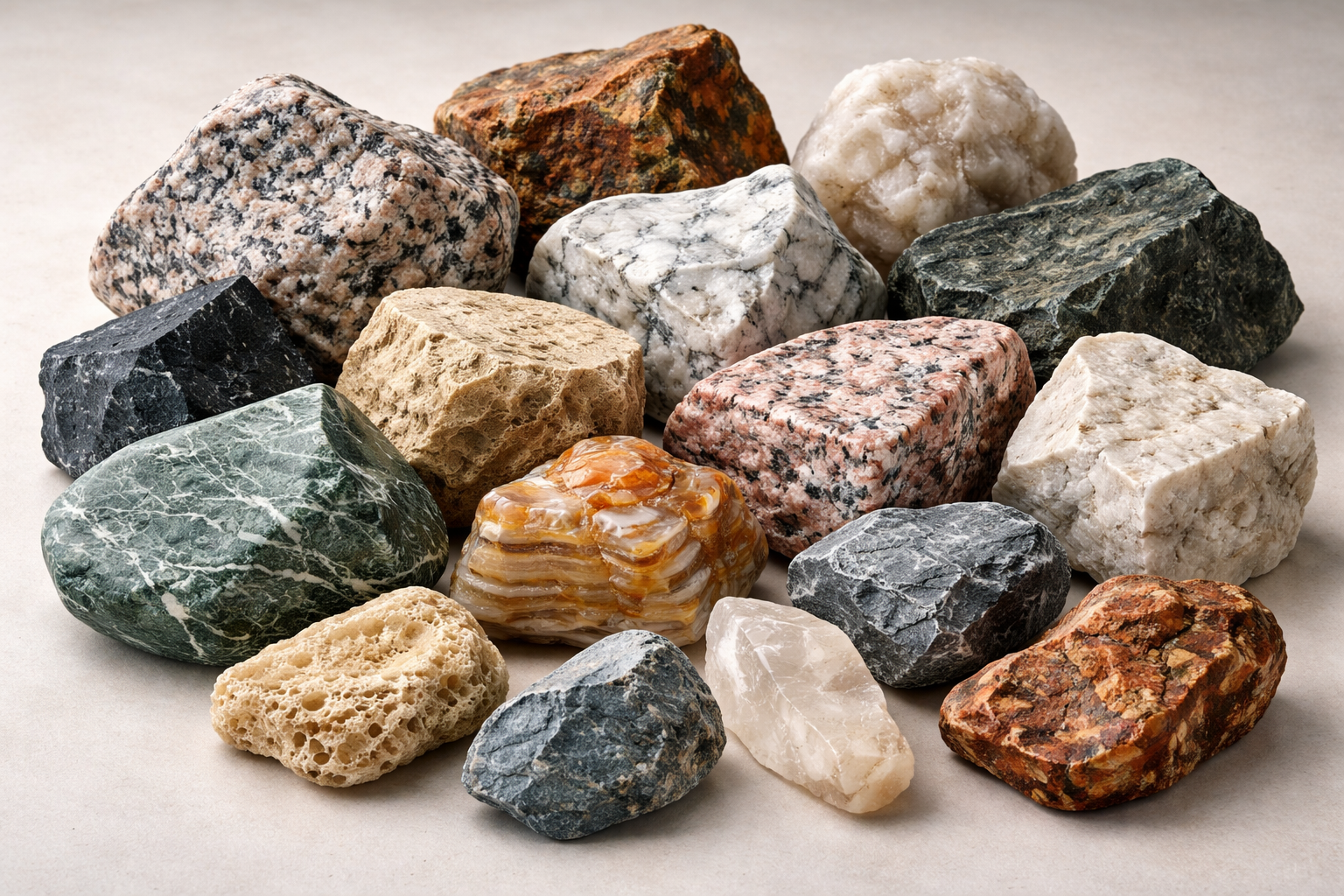
Geology is the primary Earth science, focusing on the solid Earth, the rocks of which it is composed, and the processes by which they change over time.

  • Physical Geology: Examines materials and processes.
  • Historical Geology: Traces the evolution of Earth.
  • Environmental Geology: Studies the relationship between humans and the geological environment.
Diverse Rocks

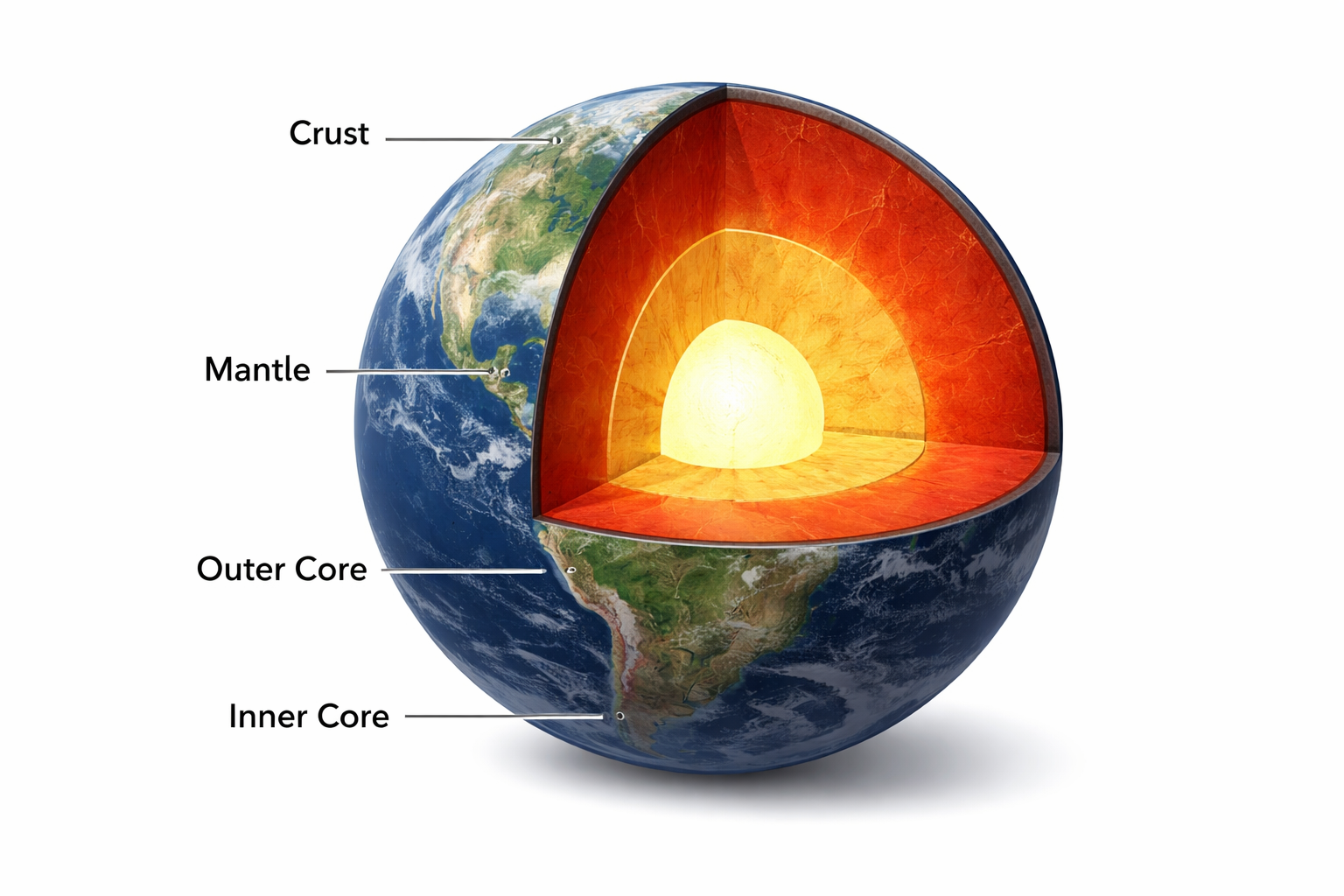
Layers of the Earth

Earth Layers

The Crust

Rigid outermost shell, 5-70km thick.

The Mantle

Viscous layer comprising 84% of volume.

Outer Core

Liquid iron and nickel, creates magnetic field.

Inner Core

Solid ball of iron at 5,400 °C.

The Continuous Rock Cycle

Rocks are constantly being recycled through three primary states:

1. Igneous

Formed from the cooling of magma or lava (e.g., Basalt, Granite).

2. Sedimentary

Formed by the accumulation of minerals or organic particles (e.g., Sandstone, Shale).

3. Metamorphic

Created by the transformation of existing rock types through heat and pressure (e.g., Marble, Slate).

Key Processes

Weathering, erosion, deposition, lithification, and melting.

Plate Tectonics

The theory that Earth's outer shell is divided into several plates that glide over the mantle.

  • Divergent: Plates moving apart.
  • Convergent: Plates colliding (mountains, trenches).
  • Transform: Plates sliding past each other.

These movements are responsible for earthquakes, volcanoes, and mountain building.

[Tectonic Interaction Diagram]

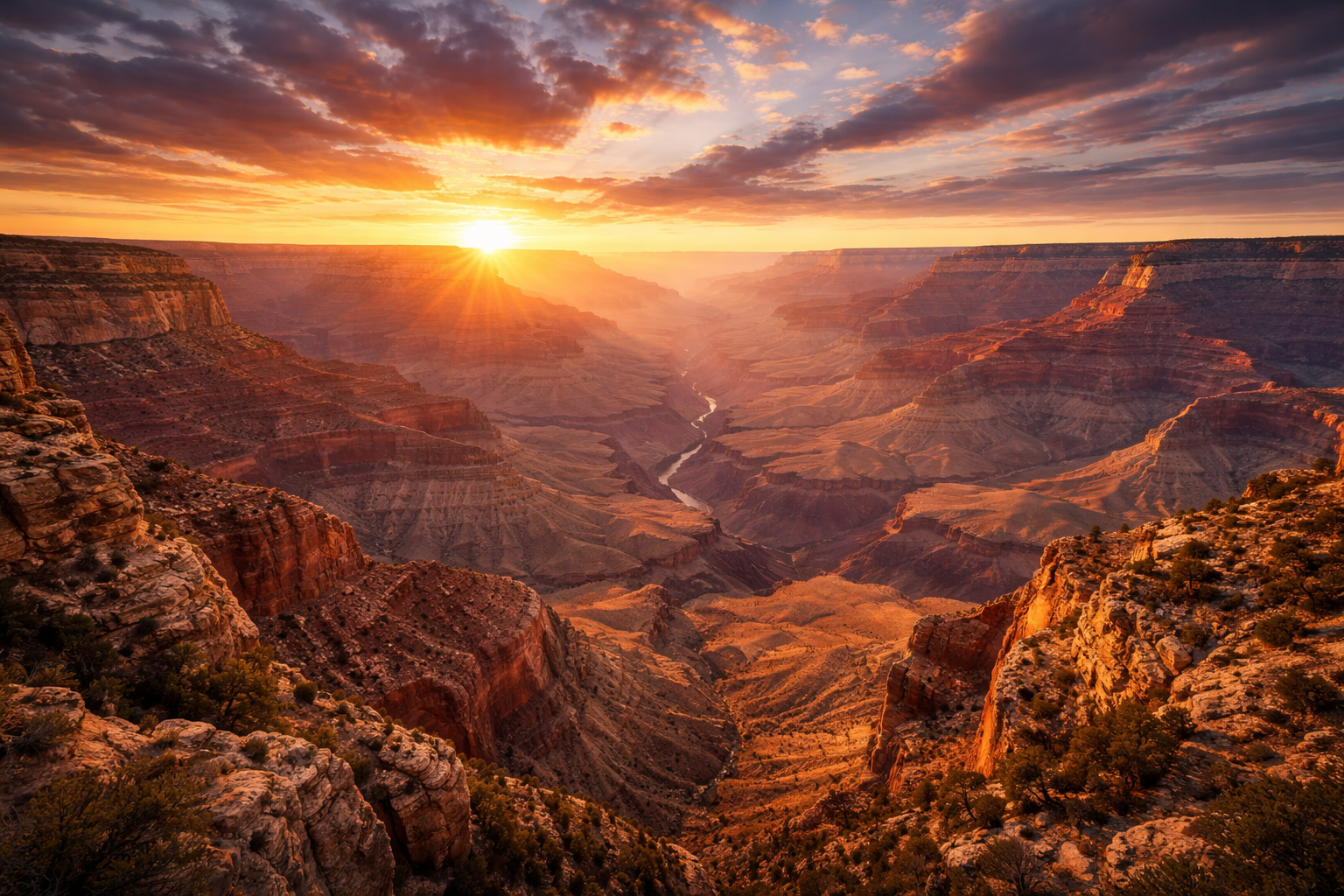
The Grand Record of Time

Grand Canyon Layers

Geological time scales allow us to understand the vast history of Earth (approx. 4.54 billion years).

  • Eons: Hadean, Archean, Proterozoic, Phanerozoic.
  • Eras: Paleozoic, Mesozoic, Cenozoic.
  • Periods: Jurassic, Cretaceous, Quaternary, etc.

Conclusion

Understanding geology is vital for our modern society:

  • Resource Management: Locating minerals, water, and energy.
  • Hazard Mitigation: Predicting landslides, eruptions, and quakes.
  • Climate History: Reading the past to understand our future climate.

Thank You for Exploring Geology!

Slide 1 of 7
Download PowerPoint